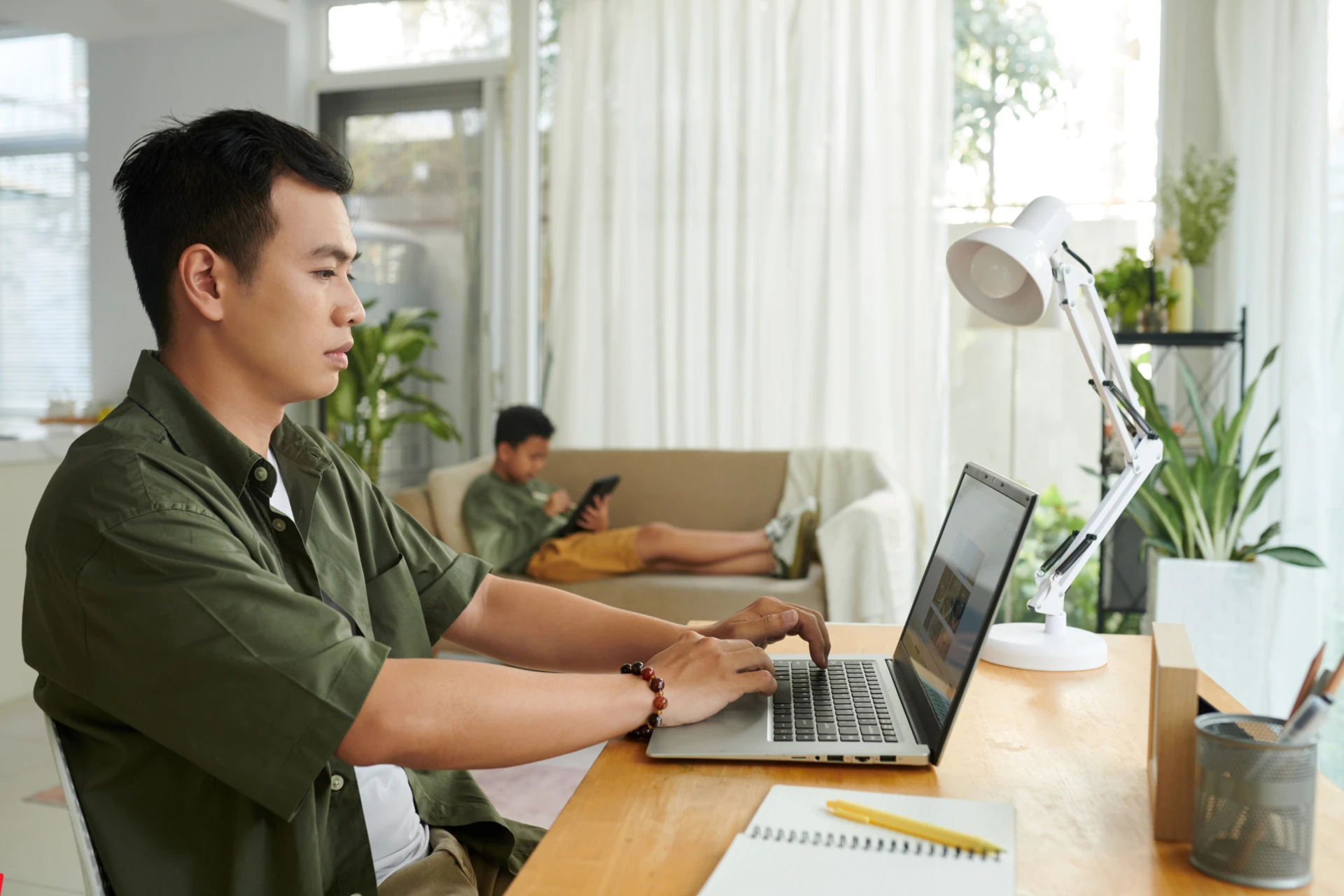
If you're one of the 36% of employed Australians who usually work from home, you're probably already familiar with the juggle of Zoom calls, makeshift desks and the occasional delivery knock mid-meeting. What you might not realise is just how much of that home office setup you can claim back at tax time.
Working from home tax deductions have been a hot topic since the pandemic reshaped where and how we work. The rules have tightened, the rates have changed, and keeping up with what you can and can't claim feels like a full-time job on its own.
The good news is that once you understand the basics, claiming your home office expenses is straightforward. And when you pair those deductions with smarter salary packaging, like a novated lease, the tax savings really start to stack up.
What "Working From Home" Means to the ATO
The Australian Taxation Office has a pretty clear definition. You're working from home if you're carrying out employment duties in a residential space rather than your usual workplace. That includes everything from full-time remote roles to hybrid arrangements where you split your week between the office and your kitchen table.
The point to note is you can't claim deductions for time spent on minimal tasks like checking emails or taking the odd phone call outside work hours. The ATO expects you to be performing substantive work, the kind that requires a dedicated space and incurs genuine running costs.
Millions of Australians claimed work-from-home expenses in the last financial year, so you're in good company. But with increased scrutiny from the tax office, it pays to get your claims right.
Fixed Rate vs Actual Cost: Which Method Saves You More?
You've got two ways to claim working from home tax deductions, and the method you choose will depend on how much you work from home and what kind of records you're willing to keep.
The 70-cent fixed rate method
The fixed rate method is the simpler option. For the 2024-25 (and now 2025-26) income year, you can claim 70 cents per hour for each hour you work from home. That rate covers electricity and gas, internet, mobile and home phone expenses, and stationery and computer consumables.
The beauty of the fixed rate is that you don't need to calculate the work-related portion of every single bill. You just track your hours, multiply by 70 cents, and you're done. You can still claim a separate deduction for the decline in value of depreciating assets like office furniture or equipment that cost more than $300, so your ergonomic chair or second monitor isn't left out.
To use this method, you need to keep a record of every hour you worked from home across the entire income year. The ATO scrapped the old four-week representative diary back in 2023, so a timesheet, roster or work-from-home log is now essential. You'll also need to hold onto at least one bill for each type of expense the rate covers, just to prove you actually incurred those costs.
The actual cost method
If you've got high energy bills, expensive equipment or a dedicated home office, the actual cost method might deliver a bigger deduction. This approach lets you claim the work-related portion of each running expense based on actual usage.
You'll need to work out what percentage of your electricity, gas, internet and phone bills relate to work. That might mean tracking kilowatt hours, measuring your office as a percentage of your home's floor area, or keeping detailed logs of work versus personal use. It's more effort, but for some people the extra refund is worth it.
One thing to note: occupancy expenses like rent, mortgage interest and council rates are generally off the table for employees.
The ATO only allows those claims in very limited circumstances, usually when your home office is your principal place of business and is set aside exclusively for work. For most of us, that's not the case, and claiming occupancy expenses can trigger capital gains tax complications down the track.
Record Keeping: How to Track Hours and Receipts Properly
Good record keeping is the backbone of any working from home tax claim. Since 2023, the ATO has tightened the rules, and a vague estimate of your hours won't cut it anymore.
You need a full-year record of the actual hours you worked from home. That could be a digital timesheet, a spreadsheet, a diary app or even your work roster if it shows when you were home-based. The key is that it's contemporaneous, meaning you log the hours as you go rather than trying to reconstruct them in June.
If you're using the fixed-rate method, you also need to keep at least one document for each type of expense covered by the rate. That might be a quarterly electricity bill, an internet invoice, a phone statement and a receipt for printer paper. You don't need every bill, just proof that you incurred the expense during the income year.
For the actual cost method, your record-keeping requirements are stricter. You'll need detailed records of all running expenses, plus calculations showing how you worked out the work-related portion. Think usage logs, floor-area measurements and apportionment formulas. It's more admin, but it's the price of a potentially bigger deduction.
Common Working From Home Tax Deductions You Might Be Missing
Even with the fixed-rate method, there are extra deductions you can claim separately. These are the ones people often overlook.
Office furniture and equipment
If you bought a desk, chair, monitor or laptop for work, you can claim the decline in value over the item's effective life. The ATO sets standard lifespans: laptops depreciate over two years, monitors over four, ergonomic chairs over seven and standing desks over ten. Items under $300 can be claimed in full in the year you buy them.
Internet expenses
While the fixed rate covers your internet, if you're using the actual cost method you can claim the work-related portion of your internet bills. If you work from home three days a week and use the internet equally for work and personal tasks on those days, you'd claim a percentage based on that usage.
Energy expenses
Electricity and gas bills have jumped 11% in the past year, which makes accurate claims more valuable. The fixed rate builds in an allowance, but if your energy use is higher than average, the actual cost method might give you a better result.
Mobile phone and home phone expenses
If you use your personal mobile for work calls or your home phone for client meetings, you can claim the work-related portion. Keep a log for a representative four-week period to work out the split between work and personal use, then apply that percentage to your annual bills.
Stationery and computer consumables
Printer ink, paper, notebooks, pens and USB drives all count. The fixed rate covers these, but if you're using the actual cost method, keep your receipts and claim the work-related portion.
How Easi Helps You Save Even More Tax
At Easi, we've spent more than 30 years helping Australians structure their finances to keep more money in their pockets. We work with thousands of knowledge workers, public servants, IT professionals and office-based employees who are already thinking about tax savings through their home office claims - and the natural next step is salary packaging your car through a novated lease.
A novated lease lets you pay for your car using pre-tax salary, which lowers your taxable income. That means you pay less PAYG tax every pay cycle, and the savings can be significant. When you combine that with your working from home tax deductions, you're maximising your take-home pay from two angles.
Novated leasing works particularly well for people in higher tax brackets, which is exactly where many of our customers sit. If you're already on the cusp of the next tax tier, reducing your taxable income through salary packaging can keep you in a lower bracket and deliver even bigger percentage savings.
We handle the entire process, from sourcing your car to bundling finance, insurance, rego and running costs into one easy repayment. You get the car you want, we take care of the admin, and you save on tax. It's the kind of straightforward, transparent service we've built our reputation on, and it's why we're consistently rated highly by our customers.
Want to see how much you could save? Our online calculator takes less than a minute and gives you a clear picture of the tax benefits. Or give us a call on 1300 266 828 and we'll walk you through the numbers.
Make Your Tax Savings Work Harder
Working from home tax deductions are a valuable way to claw back some of the costs of running a home office. The fixed-rate method keeps things simple, the actual cost method rewards detailed record keeping, and both can deliver meaningful refunds when you lodge your tax return.
But if you really want to stretch your tax savings, pairing those deductions with a novated lease is a smart move. You're already thinking about how to reduce your taxable income, so why stop at office expenses? Salary packaging your next car lets you drive something newer, better and more efficient while paying less tax along the way.
We make novated leasing easy. If you're ready to take the next step, we're here to help - get a quote today and see how much you could save.
Disclaimer: This information is general only. Tax rules can be complex and your personal circumstances matter. Speak with a registered tax agent about your specific situation, and visit the ATO's working-from-home hub for the latest guidance.