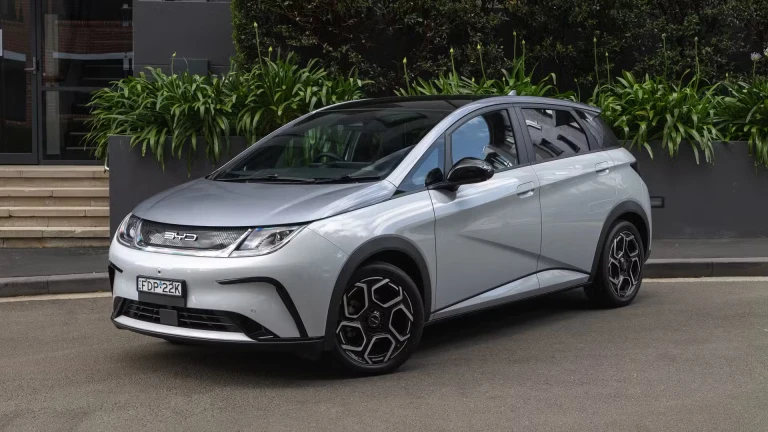
Electric vehicles are no longer the future. They're here, and they're becoming more accessible every month. The BYD Seal is a perfect example of how quickly the Australian market is shifting.
If you've been weighing up whether to make the switch to an EV, the timing might be better than you think. Let's take a closer look at what makes the BYD Seal worth considering, especially if you're exploring how novated leasing works as a way to get behind the wheel.
2025 BYD Seal Review: What Makes It Stand Out?
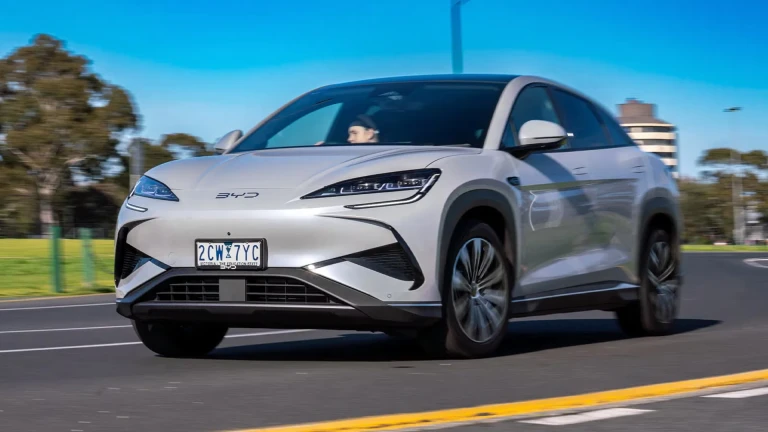
The 2025 BYD Seal is a mid-sized sedan that competes directly with the Tesla Model 3, but it brings a few tricks of its own. It's available in three variants, each targeting a different type of driver. The Dynamic Standard Range suits daily commuting, the Premium Extended Range adds luxury and longer trips, and the Performance AWD is for those who want straight-line thrills.
What sets the BYD Seal apart from other cars for novated lease is its combination of affordability, range and tech. Plus, it's backed by a six-year warranty, which is two years longer than what Tesla offers on the Model 3.
BYD Seal Cost
The variants start from $46,990 to $61,990, according to the official website of BYD. All three models (Dynamic, Premium, and Performance) sit comfortably under the luxury car tax threshold, which means they qualify for the FBT exemption on zero-emission vehicles.
That exemption is a game-changer if you're considering salary packaging. It can reduce the effective cost of running a Seal by thousands of dollars each year compared to buying the same car with post-tax income.
BYD's sharp pricing has been called out repeatedly by reviewers as one of the Seal's biggest strengths. When you compare it to the Tesla Model 3 or European rivals, the Seal consistently comes in cheaper while offering more standard equipment.
Design and Technology
Step inside the BYD Seal and the first thing you'll notice is the 15.6-inch rotating infotainment screen. You can flip it between landscape and portrait depending on what you're doing, which is a nice touch. The system supports wireless Apple CarPlay in landscape mode, plus wired and wireless Android Auto. It also comes loaded with features:
Twin wireless phone chargers sitting on the centre console
Heated and ventilated front seats
Glass roof with a power shade
12-speaker Dynaudio sound system
Digital radio (DAB+)
Keyless entry with FOBs
The 19-inch alloy wheels are wrapped in Continental tyres, and the suspension tune uses frequency-selective dampers. Reviewers have praised the handling poise, though some note the ride can feel firm on rougher roads. Boot space is generous at 400 litres, and there's a 50-litre frunk up front. You won't find a spare wheel, just a tyre repair kit, which is standard for most modern EVs.
Safety
Safety is taken seriously in the BYD Seal. It earned a five-star ANCAP rating (2023-2025 criteria), with strong scores for adult occupant protection (89%) and child occupant protection (87%). The safety systems include:
Autonomous emergency braking (works at junctions, for pedestrians and when reversing)
Adaptive cruise control with stop-go capability
Lane keep assist and lane centring
Blind spot monitoring
Rear cross traffic alert with brake intervention
360-degree surround view camera
Front and rear parking sensors
Nine airbags, including a front-centre airbag
These features are standard across all seal variants, which means even the entry-level Dynamic gets the full suite of driver assistance tech.
Range, Battery, and AC Charging
The BYD Seal uses the company's Blade battery, which is a lithium iron phosphate (LFP) design. LFP batteries are known for their safety and longevity, though they typically offer slightly less energy density than other lithium-ion chemistries. Here's how the range stacks up:
Dynamic Standard Range: 61.44 kWh battery, claimed WLTP range of 460 km
Premium Extended Range: 82.56 kWh battery, claimed WLTP range of 570 km
Performance AWD: 82.56 kWh battery, claimed WLTP range of 520 km
The Seal supports AC charging at 11 kW and DC fast charging at up to 150 kW. The Seal offers two regenerative braking modes (Standard and High), though it doesn't have a true one-pedal driving mode like some competitors.
BYD Seal Performance
The 0-100 km/h times vary depending on which model you choose. The Dynamic Standard Range does it in 7.5 seconds, the Premium Extended Range in 5.9 seconds, and the Performance AWD in a blistering 3.8 seconds.
That Performance model is genuinely quick. With 390 kW and 670 Nm going to all four wheels, it rivals much more expensive sports sedans in straight-line performance. Sport mode sharpens throttle response and adjusts the steering feel, making the driving experience more engaging.
Even the rear-wheel-drive Premium model feels brisk. The instant torque from the electric motor makes overtaking and merging onto highways effortless. The steering wheel offers good feedback, and the suspension tune strikes a decent balance between comfort and control.
How Does the BYD Seal Compare to the Tesla Model 3?
The Tesla Model 3 is the obvious rival. Both are mid-sized electric sedans aimed at the same buyers, but they take different approaches.
The Seal Premium sits around $3,000 cheaper than the base Model 3 RWD when you factor in on-road costs. It also offers a larger battery (82.56 kWh vs 60 kWh), which translates to about 70 km more claimed range. However, where the Seal pulls ahead is in standard features. You get a rotating screen, ventilated front seats, a glass roof, rear air vents and a longer vehicle warranty. The Model 3 counters with faster charging and access to Tesla's Supercharger network, though that advantage is shrinking as more CCS chargers come online.
Software is where Tesla still leads. Over-the-air updates and the polish of Tesla's interface are hard to beat. But if you value physical comfort and upfront value, the Seal makes a strong case.
Ownership Costs and the Novated Lease Advantage
Running costs for the BYD Seal are low. The service interval is 12 months or 20,000 km, and a prepaid eight-year service plan costs $2,390, averaging $299 per year.
The battery warranty covers eight years or 160,000 km, guaranteeing at least 70% capacity. The vehicle warranty runs for six years or 150,000 km, though some multimedia and suspension components drop to four years.
If you're considering a novated lease, the numbers get even better. Because the Seal qualifies for the FBT exemption, you can package the car, insurance, rego, servicing and charging costs into one pre-tax payment. Use our novated lease savings calculator to see how much you could save based on your salary and tax bracket.
Ready to Make the Switch With Easi?
The BYD Seal proves that you don't need to spend Tesla money to get a capable, well-equipped electric sedan. With sharp pricing, a long warranty, and an impressive feature list, it delivers outstanding value for drivers ready to go electric.
If you're thinking about making the move to an EV, now’s a great time. That’s where Easi comes in. With the FBT exemption still in place and charging infrastructure improving every month, switching is more accessible than ever.
At Easi, our experienced team specialises in novated leasing and can guide you through every step, from comparing options to breaking down exactly how much you can save. Get a quote today and see how easy it can be to drive away in a BYD Seal.
Frequently Asked Questions
Is Tesla better than BYD?
There's no clear winner. Tesla offers broader Supercharger access and more polished software updates. The BYD Seal beats the Model 3 on price, interior features (like ventilated seats and a rotating screen), and warranty length. The Seal's LFP battery also tends to hold its capacity longer over time. It depends on what matters most to you.
What happens to electric cars after 8 years?
Most EVs retain 70-80% of their battery capacity after 160,000 km. BYD guarantees at least 70% capacity for eight years or 160,000 km. After that, batteries can be repurposed for home energy storage or recycled. Facilities in Victoria, such as Ecobatt, already recover over 90% of the valuable metals from old EV batteries.
What drains an electric car battery the most?
High-speed highway driving, aggressive acceleration, and heavy use of heating or air conditioning (especially fan speed on max) are the biggest drains. Roof racks and under-inflated tyres also hurt efficiency. Keeping your driving smooth and your tyres properly inflated makes a real difference to range.