When you're shopping for a small car in Australia, two names keep popping up: the Toyota Corolla and the Mazda 3. Both sit at the top of the sales charts for good reason. They're reliable, well-equipped, and genuinely pleasant to live with. But they take different approaches to the same brief.
The Corolla leans into efficiency and value. Toyota's hybrid powertrain sips fuel, and the brand's reputation for bulletproof reliability means strong resale down the track. The Mazda 3, on the other hand, feels more upmarket. Its cabin materials and driving dynamics punch above its price tag, making it the choice for people who want a bit more polish in their daily commute.
Then there's the Hyundai i30 and Toyota Camry, which also deserve a mention. The i30 brings the biggest boot in the bunch, while the Camry steps up a segment, offering family-car space with hybrid running costs.
Let's break down what each contender offers, so you can make the right call for your needs.
Toyota Corolla vs Mazda 3: The Basics
Both the Toyota Corolla and Mazda 3 are five-door hatches built for Australian conditions. They run on regular 91 RON fuel (except the Camry, which prefers 95), and both come with five-year unlimited-kilometre warranties.
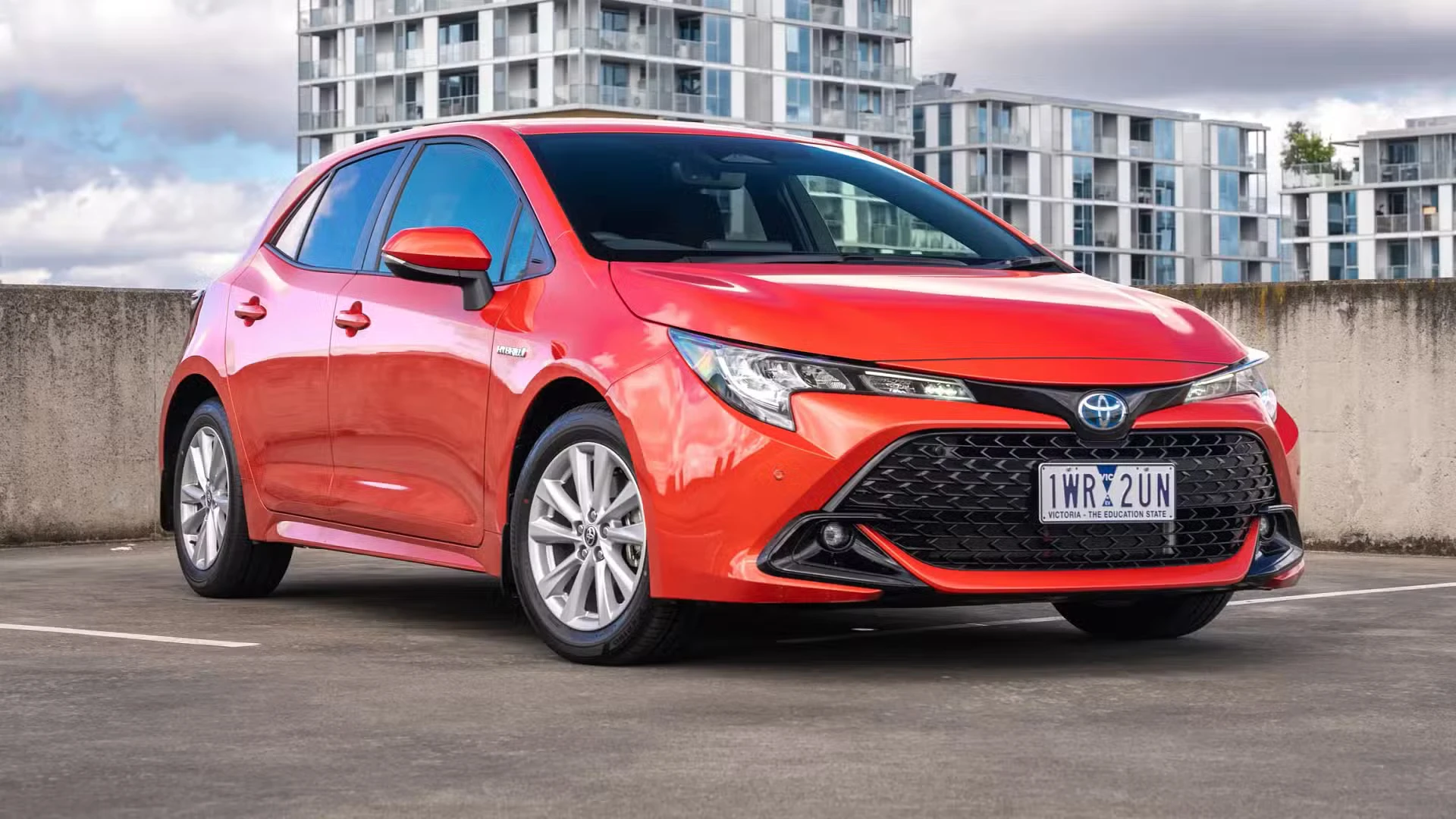
The Corolla ZR Hybrid pairs a 1.8-litre petrol engine with an electric motor for a total system output of 103 kW. Real-world fuel use hovers around 5.6 L/100 km, though Toyota claims 4.0. The boot offers 333 litres with no spare tyre, or 217 litres if you opt for a space-saver on lower grades.
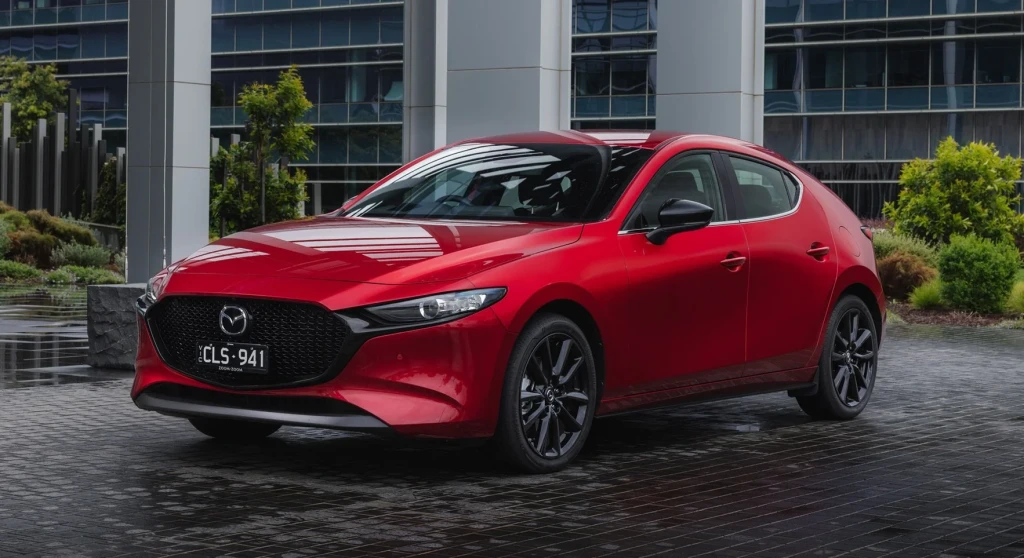
The Mazda 3 G20 Touring uses a 2.0-litre petrol engine producing 114 kW and 200 Nm of torque, paired with a six-speed automatic. Fuel consumption is higher at 8.9 L/100 km in testing, despite a claim of 5.9. Boot space comes in at 295 litres, and you get a space-saver spare as standard.
On paper, the Mazda 3 edges ahead on power. But the Corolla's hybrid system delivers smoother acceleration and far better fuel economy, which matters when you're filling up every week.
Hyundai i30 vs Toyota Corolla: Adding a Third Option
The Hyundai i30 N Line deserves attention if you value practicality and warranty coverage. At $36,000, it's the cheapest of the trio. The 1.5-litre turbo mild-hybrid produces 117 kW and 253 Nm, making it the quickest to 100 km/h at 8.6 seconds.
The i30's real strength is cargo space. Its 395-litre boot dwarfs both the relatively small boot of the Corolla and Mazda 3, which is handy if you regularly haul shopping, sports gear, or weekend luggage. Fuel use sits at 6.5 L/100 km in real-world testing, landing between the Corolla's frugality and the Mazda's thirst.
Hyundai's seven-year warranty also stands out. It's the longest in this group and gives peace of mind if you plan to keep the car for a while. The downside? The cabin feels a step behind the Mazda 3's premium materials, and the dual-clutch transmission can be jerky in stop-start traffic.
Tech and Comfort: Apple CarPlay and More
All three cars offer wireless Apple CarPlay and Android Auto, though the Corolla's Android Auto requires a cable. The Mazda 3 adds a head-up display on higher grades and uses a rotary dial to control the infotainment, which some drivers love and others find fiddly. The i30 sticks with a touchscreen, which feels more intuitive but less premium.
Adaptive cruise control is standard across the board, along with lane-keeping assist and automatic emergency braking. The Corolla's system includes lane-trace assist, which gently nudges the steering to keep you centred. The Mazda 3's system feels more natural, while the i30's can be a bit heavy-handed.
Front seats are comfortable in all three, though the Mazda 3's leather and stitching feel a notch above. Rear legroom is adequate, but taller passengers might find the Mazda's rear headroom a bit tight. The Corolla and i30 offer more space for back-seat passengers on longer trips.
Toyota Corolla vs Camry: Should You Step Up?
The Toyota Camry Ascent Hybrid is a different proposition. At $39,990, it costs only $890 more than the Corolla ZR Hybrid but delivers a bigger 2.5-litre hybrid system with 170 kW of maximum power. Fuel economy is slightly better at 4.4 L/100 km in real-world testing, and the 524-litre boot is enormous by comparison.
The Camry is also a sedan, not a hatch, and it's nearly 500 mm longer. That extra size gives you more cabin space and a smoother ride, but it also makes city parking trickier. If you've got a family or regularly carry passengers, the Camry makes sense. If you're after a nimble city car, stick with the Corolla.
The Camry also comes with the newest ANCAP five-star rating (2024), including eight airbags and advanced detection for cyclists and motorcycles. It's the safest option here on paper, though all four cars performed well in their original crash tests.
Safety and Ratings: What You Need to Know
Here's an important point: the ANCAP ratings for the Corolla, Mazda 3, and i30 have all expired. The Corolla's 2018 five-star rating lapsed in December 2025, as did the Mazda 3's 2019 score. The i30's 2017 rating expired even earlier.
Does this mean they're unsafe? Not at all. The underlying crash-test results remain solid, and all three include comprehensive driver-assist tech. But ANCAP has raised the bar over the years, and newer models like the Camry meet stricter standards.
If safety ratings are a priority, the Camry is the standout. Otherwise, focus on the active safety features each car offers. All three include blind-spot monitoring, rear cross-traffic alert, and multiple airbags. They're all genuinely safe cars to drive.
Which One Should You Choose?
There's no single winner here. The Toyota Corolla is the smart choice if you want low running costs, strong resale, and a smooth hybrid drive. It's the car you buy with your head, not your heart.
The Mazda 3 appeals if you care about design, cabin quality, and driving feel. It's the car you'll enjoy on a winding road, even if it costs a bit more to run.
The Hyundai i30 makes sense if you need space, want the longest warranty, and don't mind a slightly older interior design. It's the practical pick for families or anyone who regularly fills the boot.
And if you're thinking about stepping up, the Toyota Camry offers family-sized space with small-car fuel economy. It's worth a test drive if you've got the room for a bigger vehicle.
Make It Easi with Novated Leasing
Whichever contender you choose, Easi can help you get behind the wheel for less. A novated lease lets you pay for your car using pre-tax salary, which lowers your taxable income and bundles all your running costs into one simple payment.
We've been helping Australians save on vehicle costs since 1992, and we make the whole process straightforward. Reach out to us by filling out our contact form, and we'll walk you through your options. If it's the Corolla, Mazda 3, i30, or Camry, or something else entirely, we'll help you drive away smarter.