Shopping for a dual-cab ute in Australia? Many in Australia are comparing the Mitsubishi Triton vs Toyota Hilux, although the Isuzu D-Max and Nissan Navara have thrown their hats in the ring too.
Each of these four wheel drive workhorses brings something different to the table. Between hauling tools to a job site, towing the boat up the coast, or simply wanting a capable family vehicle that can handle the school run and weekend adventures, understanding what sets them apart will help you make the right call.
Let's break down how these dual cab utes stack up across the things that actually matter: power, safety, running costs, and everyday practicality.
Power Under the Bonnet: 2.4 Litre vs 2.8 L Diesel Engines
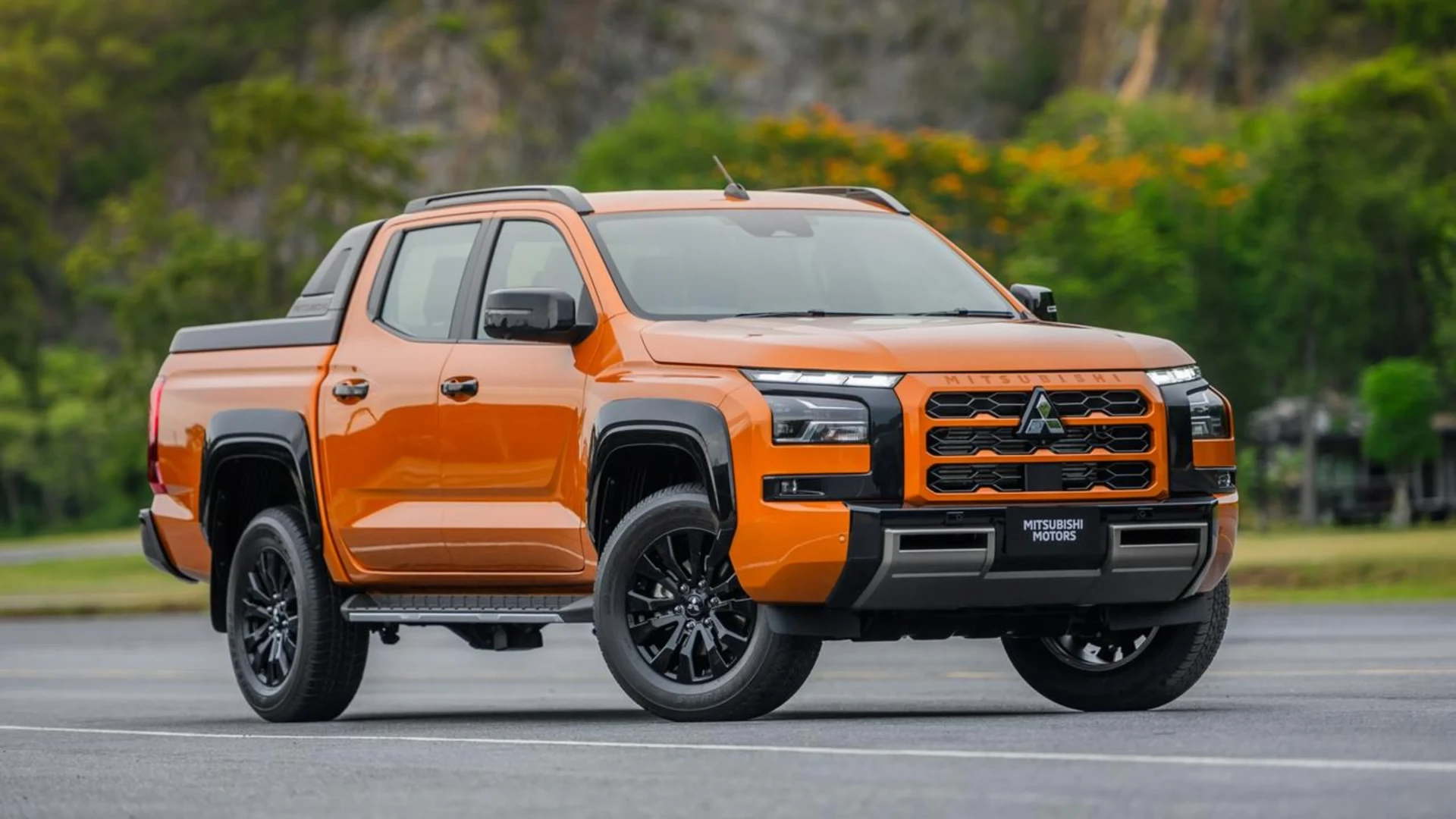
The Mitsubishi Triton runs a 2.4 L twin-turbo diesel engine that punches out 150 kW of power and 470 Nm of torque. That torque figure is impressive for its size, and the twin-turbo setup gives you decent pull when you need it. You can pair it with either a six-speed automatic transmission or a manual, depending on your preference.
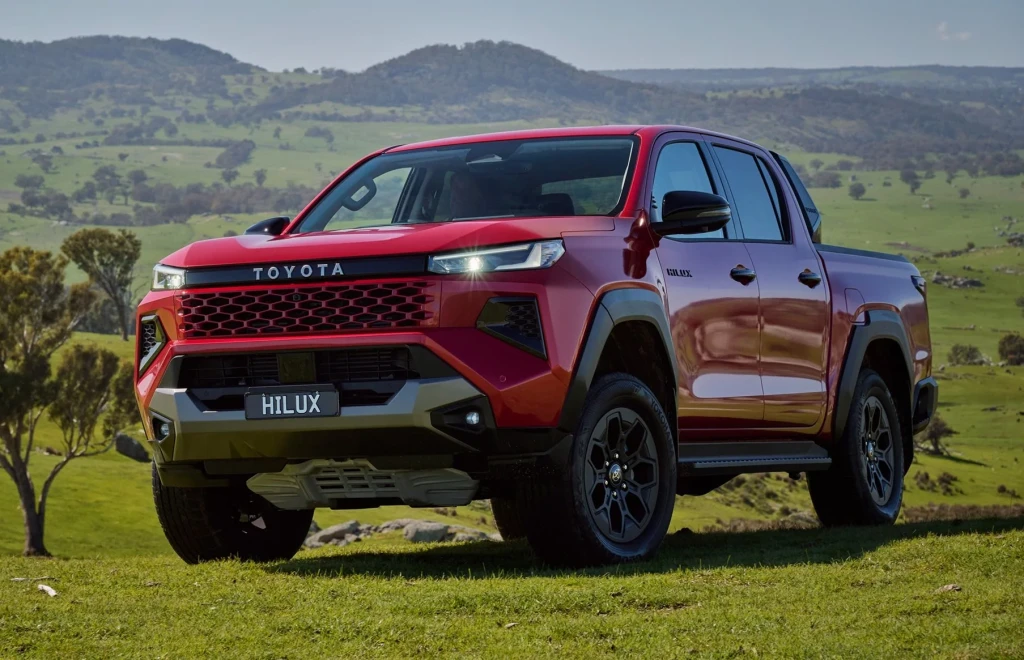
Toyota's Hilux takes a different route with its larger 2.8 L turbo diesel, now enhanced with a 48-volt mild-hybrid system on SR, SR5, and Rogue models. It delivers the same 150 kW but nudges torque up to 500 Nm.
The mild-hybrid tech doesn't add power, but it does smooth out throttle response and shaves roughly 10% off fuel consumption compared to the previous model.
The Isuzu D-Max offers two diesel engine options. The 3.0 L unit produces 140 kW and 450 Nm, while a smaller 1.9 L diesel (110 kW / 350 Nm) is available on certain 4×2 and fleet models. Most buyers will gravitate toward the 3.0 L for its stronger mid-range grunt. Like the others, it comes with a six-speed automatic transmission or manual.
Nissan's Navara uses a 2.3 L twin-turbo diesel that generates 140 kW and 450 Nm. It's paired with a seven-speed automatic or six-speed manual, giving it one extra gear over its rivals. The Navara's engine is smooth and refined, though it doesn't quite match the Triton's torque output.
All four can tow 3,500 kg when properly equipped, so if towing is your main concern, they're evenly matched on paper.
Driving Experience: On-Road Comfort and Rough Terrain Mode
How a ute drives day-to-day matters just as much as what's on the spec sheet. The Mitsubishi Triton comes with Super-Select II four wheel drive on GLS and GSR variants, which includes a rear differential lock and a unique rough terrain mode.
This mode adjusts throttle response and traction control to help you navigate mud, sand, or loose gravel without getting bogged.
The Toyota Hilux uses a part-time 4WD system with a rear diff-lock standard on SR and above. It's a proven setup that's been refined over decades. The Hilux rides on leaf springs, which can feel a bit firm when the tub's empty but settle down nicely under load.
Isuzu's D-Max also runs part-time 4WD with a rear diff-lock across 4×4 models. Its leaf spring rear suspension is tuned for a decent balance between comfort and capability. Real-world testing shows the D-Max handles bitumen and dirt roads confidently, with good body control and minimal bounce.
Here's where the Nissan Navara stands out: it's the only one in this group with coil rear suspension instead of leaf springs. That gives it a noticeably smoother ride when you're not carrying a load, making it more car-like around town. The trade-off is slightly less payload capacity compared to the others, but for many buyers, the comfort gain is worth it.
Safety Tech: Lane Departure Warning, Adaptive Cruise Control, and More
Safety equipment has become a major differentiator in the ute segment. The Mitsubishi Triton leads the pack here.
Every variant, even the base models, gets autonomous emergency braking (AEB), adaptive cruise control with stop-go functionality, lane departure warning and lane keep assist, driver monitoring system, rear cross traffic alert, blind-spot monitoring, and eight airbags.
It earned a five-star ANCAP rating under the stricter 2024 protocol, which is a solid tick for fleet buyers and families.
The Toyota Hilux includes AEB, lane departure alert with steering assist, and rear cross traffic alert on SR5 and higher trims. Adaptive cruise control is available but only on automatic transmission models. The Hilux was tested by ANCAP in 2025, so it holds five stars in some of the most recent testing.
The Isuzu D-Max matches the Triton's safety suite with turn-assist AEB, lane keep assist, driver monitoring, stop-go adaptive cruise, blind-spot monitoring, and rear cross traffic alert across the range. It was tested under the 2022 ANCAP protocol and scored five stars, giving it a marketing edge alongside the Triton.
Nissan's Navara offers AEB, lane departure warning, blind-spot monitoring, and rear cross traffic alert on ST and above, but it lacks adaptive cruise control entirely. That's a notable gap if you do a lot of highway driving. Its five-star ANCAP rating dates 2024, giving it a similar edge to the Triton.
Practicality: Tub Space, Tie-Down Points, and Cab Chassis Options
All four dual-cab utes offer similar tub dimensions, with enough width and length to carry a standard pallet or stack of timber. Each comes with four tie down points as standard, making it easy to secure loads. If you're after a cab chassis for custom fitouts, the Triton GLX, Hilux Workmate, D-Max SX, and Navara SL are all available in that configuration.
Payload varies slightly. The Triton GLX cab chassis can handle up to 1,130 kg, while the D-Max SX cab chassis tops the group at 1,320 kg. The Hilux Rogue dual-cab sits around 1,015 kg, and the Navara exceeds 1,200 kg on cab-chassis models. If you're regularly hauling heavy gear, those extra kilos matter.
Inside the cabin, all four offer cloth seats on lower trims, with leather or synthetic leather on higher grades. You'll find a centre console with a fold-down centre armrest, air vents for rear passengers, and LED headlights on most variants.
The Triton stands out with wireless Android Auto and Apple CarPlay, while the others still use wired connections (though the D-Max is expected to add wireless in the 2025 model year).
The Navara's coil rear suspension means a smoother ride for passengers when the tub's empty, which is a genuine advantage if you use your ute as a daily driver more than a workhorse.
Make Your Decision with Confidence
There's no single winner in the Mitsubishi Triton vs Toyota Hilux vs Isuzu D-Max vs Nissan Navara showdown, and that's actually a good thing. Each ute excels in different areas.
The Triton offers the best warranty, strong torque from its 2.4 L engine, and a comprehensive safety package at a competitive price. The Hilux brings proven reliability, the strongest resale value, and Toyota's extensive service network.
The D-Max delivers excellent safety tech, solid comfort, and competitive running costs. The Navara offers the smoothest unladen ride thanks to its coil rear suspension and the longest service intervals.
Your choice comes down to what matters most to you. If you value long-term peace of mind and tech features, the Triton makes sense. If resale value is your priority, the Hilux is hard to beat. If you want the latest safety gear and good all-round capability, consider the D-Max. And if daily comfort matters more than payload, the Navara deserves a look.
Whichever dual-cab ute has your name on it, a novated lease from Easi can help you save on running costs through pre-tax salary deductions and GST savings on things like fuel, servicing, and accessories such as tub liners and tow bars.
Want to see how much you could save? Try our novated lease calculator or give the team at Easi a call. We'll walk you through the options and help you get behind the wheel of the ute that's right for you.